
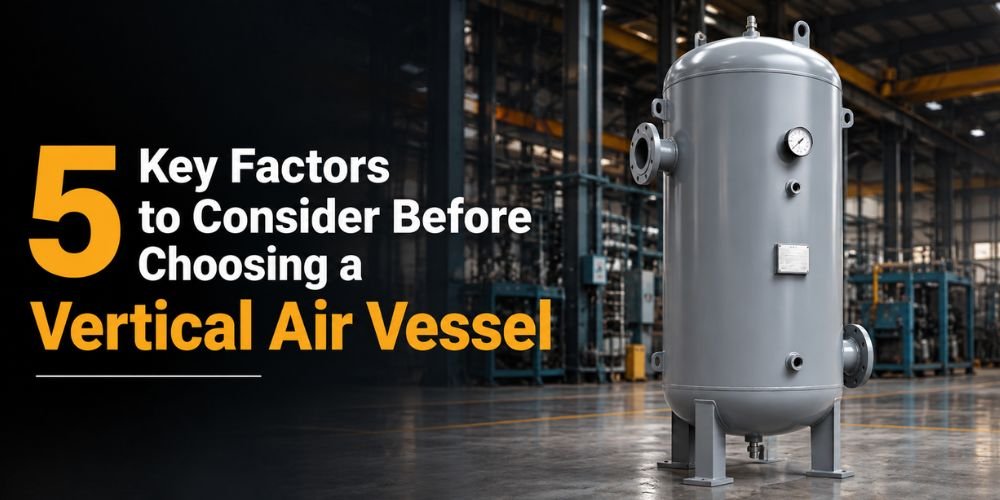
Choosing the right vertical air vessel is an important decision for industries that depend on compressed air systems and pressure management. A suitable air vessel can support stable system performance, reduce pressure fluctuations, and help maintain reliable operation over time. However, selecting a vessel only by its size or price can lead to problems later.
Before making a purchase, industries should consider factors such as working pressure, capacity, available space, material, application requirements, and manufacturing quality. Working with an experienced air vessel manufacturer can also make the selection process easier because the vessel can be matched with the actual requirements of the application.
Hi-Tech Metal Formings (I) is an established auto part manufacturer with experience in industrial fabrication and engineered metal products. Its manufacturing capabilities and focus on quality make proper product specifications an important part of selecting pressure equipment for demanding industrial applications.
Capacity is one of the first factors to consider when selecting an air vessel tank. The required capacity depends on the compressed air system, compressor output, air demand, operating cycle, and application.
A vessel that is too small may not provide sufficient air storage for the system. On the other hand, selecting a vessel much larger than required can occupy unnecessary space and increase the overall investment.
Before selecting the capacity, consider:
The correct capacity should be determined according to the complete system rather than selecting a vessel based only on a standard size.
Every vertical air vessel is designed to operate within specific pressure conditions. The working pressure, design pressure, temperature, and application environment should be clearly understood before ordering.
Different industries may have different requirements. Manufacturing plants, automotive facilities, engineering units, and other industrial operations may use compressed air systems with varying pressure demands.
The selected vessel should be suitable for the intended operating conditions and manufactured according to applicable engineering and safety requirements.
When comparing pressure vessel manufacturers, buyers should pay attention to design practices, fabrication capabilities, inspection procedures, and certifications rather than focusing only on the initial purchase price.
One of the main advantages of a vertical air vessel is its efficient use of floor space. Its upright configuration can be useful in manufacturing facilities where floor area is limited but sufficient vertical clearance is available.
Before installation, check the available height, foundation area, access for maintenance, connection points, and surrounding equipment.
The installation location should also allow technicians to inspect important components and carry out maintenance when required. Clearance around the vessel can be just as important as the vessel's footprint.
A vertical configuration can be especially useful when the plant layout requires equipment to occupy less horizontal floor space.
The quality of an air vessel depends heavily on the material used and the manufacturing process. Material selection should be suitable for the pressure, temperature, operating environment, and intended application.
Fabrication quality is equally important. Welding, forming, dimensional accuracy, surface condition, nozzle positioning, and final inspection can all affect the reliability of the finished vessel.
This is why choosing an experienced air vessel manufacturer is important. A capable manufacturer should have suitable fabrication infrastructure, skilled personnel, inspection systems, and quality-control procedures.
Hi-Tech Metal Formings (I) brings extensive manufacturing experience from the automotive and engineered metal component sector. Established in 1996, the company operates multiple manufacturing facilities in Indore and manufactures a range of fabricated and engineered products for industrial and OEM applications.
For air receiver and pressure vessel applications, certifications and inspection practices should also be reviewed according to the requirements of the intended market and application.
The air vessel tank price is naturally an important part of the purchasing decision, but it should not be the only deciding factor.
Two vessels may appear similar in terms of capacity but differ considerably in material, design, welding quality, testing, certifications, finish, and manufacturing controls. A lower initial price may not always represent better value if the product does not meet the application's requirements.
When evaluating quotations, consider:
A better approach is to compare the complete specification and expected service life rather than comparing prices alone.
Selecting the right manufacturer can simplify the entire procurement process. An experienced manufacturer can understand the application, review technical requirements, recommend suitable configurations, and manufacture the vessel according to defined specifications.
Hi-Tech Metal Formings (I) has built its manufacturing experience around automotive sheet metal components, fabricated assemblies, air tanks, mechanical jacks, pressure vessels, and other engineered products. Its quality systems and manufacturing infrastructure support production for demanding industrial and OEM requirements.
For buyers, the objective should be to select a vessel that combines appropriate capacity, pressure rating, material quality, manufacturing standards, and application suitability.
A vertical air vessel is an important part of many compressed air and industrial systems. Choosing one should involve more than checking capacity and air vessel tank price.
Start by understanding the required capacity and operating pressure. Then evaluate the available installation space, material and fabrication quality, testing requirements, certifications, and manufacturer experience.
By comparing these factors carefully and working with reliable pressure vessel manufacturers, businesses can make a more informed purchasing decision and select an air vessel suited to their operational requirements.
1. What is a vertical air vessel?
A vertical air vessel is a pressure-rated storage vessel designed to store compressed air or other gases under controlled pressure. Its upright design helps reduce the floor space required for installation.
2. How do I choose the right air vessel capacity?
Capacity should be selected according to compressor output, air consumption, pressure requirements, operating cycles, and future system needs. The complete compressed air system should be evaluated before finalizing the vessel size.
3. Why is working pressure important when selecting an air vessel?
Working pressure determines the operating conditions the vessel needs to safely handle. The vessel should be designed and rated according to the required pressure and applicable engineering standards.
4. Does vertical design save space?
Yes. A vertical configuration generally uses less floor area than an equivalent horizontal arrangement, making it useful for facilities where floor space is limited.
5. Should I choose an air vessel based only on price?
No. The air vessel tank price should be considered along with material quality, capacity, pressure rating, fabrication quality, testing, certifications, and manufacturer experience.
6. Why should I choose an experienced air vessel manufacturer?
An experienced manufacturer is better positioned to understand technical specifications, fabrication requirements, quality controls, testing procedures, and application-specific needs. This can help reduce the risk of selecting an unsuitable vessel.