
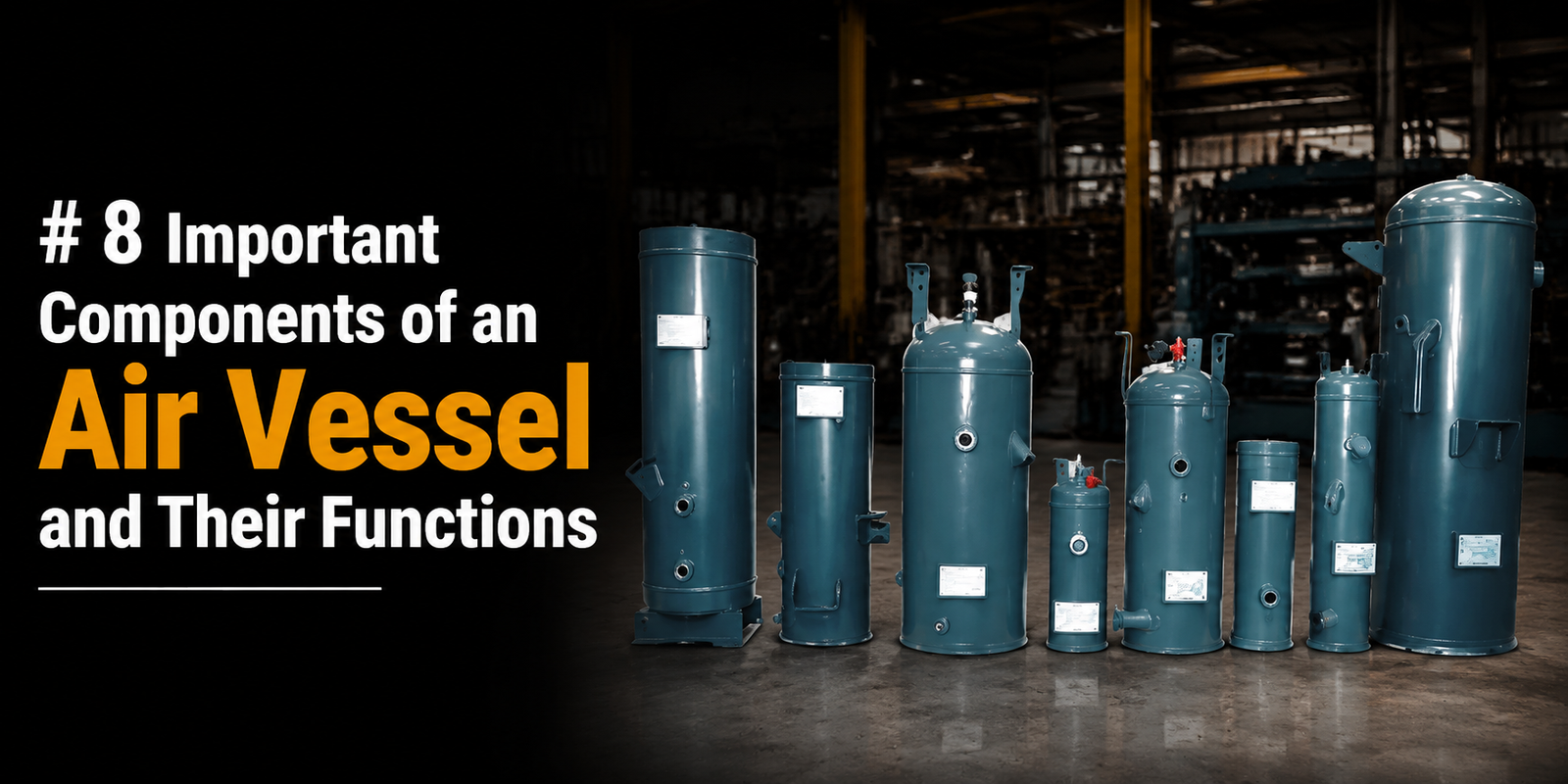
An air vessel is more than a simple compressed-air storage tank. Its shell, inlet and outlet connections, safety relief valve, pressure gauge, drain valve, mounting supports, and inspection opening all perform important functions. Understanding these eight components helps industries make better equipment decisions and follow suitable maintenance practices.
For businesses searching for an air vessel manufacturer in Indore or evaluating an air vessel tank in Indore, checking construction quality, safety features, specifications, and manufacturing capabilities is important. Hi-Tech Metal Formings (I), an auto part manufacturer, highlights the importance of reliable engineering and fabrication practices for industrial requirements.
An air vessel is an important part of many compressed-air systems. It stores compressed air, helps maintain steady pressure, reduces pressure fluctuations, and supports the smooth operation of connected equipment. A properly designed air vessel can also reduce unnecessary load on compressors and improve the overall efficiency of a pneumatic system.
For industries that depend on compressed air every day, understanding the main components of an air vessel is useful for selecting the right equipment, planning maintenance, and ensuring safe operation. This guide explains eight important air vessel components and the role each one plays.
An air vessel is a pressure-rated storage tank used to hold compressed air. It is commonly installed between the compressor and the air distribution system. When the compressor produces more air than the equipment needs at a particular moment, the vessel stores the extra air. When demand increases, the stored air can be supplied to the system.
Air vessels are used in manufacturing plants, workshops, automobile industries, engineering units, food-processing facilities, and many other industrial applications.
Choosing a reliable air vessel manufacturer in Indore is important because the vessel must be designed and manufactured according to the operating pressure, capacity, material requirements, and applicable safety standards.
The shell is the main body of the air vessel. It forms the pressure-containing chamber where compressed air is stored. The shell is generally manufactured from suitable pressure-vessel-grade material selected according to design requirements. Its thickness and construction are determined by factors such as working pressure, temperature, vessel capacity, material strength, and applicable design standards.
A strong and properly engineered shell is essential for reliable operation because it remains under pressure during normal use.
The air inlet connection provides the passage through which compressed air enters the vessel from the compressor or upstream equipment. Its size and design should match the connected piping system. A correctly designed inlet helps maintain proper airflow while reducing unnecessary pressure loss.
During installation, the inlet connection should be checked carefully for proper alignment and leak-free joining.
The air outlet connection allows stored compressed air to move from the air vessel toward downstream equipment. The outlet arrangement should be suitable for the required airflow and connected piping. A well-positioned outlet helps deliver compressed air efficiently to the distribution system.
In industrial applications, proper outlet sizing is especially important when several machines may use compressed air at the same time.
The safety relief valve is one of the most important safety components of an air vessel. Its purpose is to release pressure if the vessel pressure rises beyond the permitted limit.
The valve must be correctly selected and maintained according to the vessel's design and operating requirements. It should never be blocked, removed, or improperly adjusted. Regular inspection of the safety valve is important because it provides an essential layer of protection against excessive pressure.
A pressure gauge shows the pressure inside the air vessel. Operators can use this reading to monitor whether the vessel is operating within its intended pressure range.
A clear and properly functioning gauge makes it easier to identify abnormal pressure conditions. If the gauge gives an incorrect reading, operators may not have an accurate understanding of the vessel's operating condition. For this reason, pressure gauges should be inspected and calibrated as required by the operating environment and applicable procedures.
Compressed air often contains moisture. When air cools inside the vessel, some of this moisture can collect at the bottom of the tank. The drain valve allows accumulated condensate to be removed from the vessel. Regular draining helps reduce internal moisture-related problems and supports better air-system maintenance.
Depending on the application, a manual drain or suitable automatic drainage arrangement may be used.
Mounting supports, saddles, or legs hold the air vessel securely in its installed position. They transfer the vessel's weight safely to the supporting structure or foundation.
The support arrangement must be designed according to the vessel size, weight, installation conditions, and expected loads. Proper support also helps maintain stability during operation. An air vessel should always be installed on a suitable foundation with appropriate clearance for inspection, maintenance, and drainage.
A manhole or inspection opening provides access for internal inspection and maintenance where the vessel design includes such an arrangement. It allows qualified personnel to inspect internal surfaces, check for corrosion or deposits, and carry out required maintenance activities.
The opening must be properly sealed and designed to maintain the pressure integrity of the vessel during operation. Inspection procedures should always follow applicable safety requirements.
Every component of an air vessel has a specific purpose. The shell stores compressed air, inlet and outlet connections manage airflow, the safety relief valve handles excessive pressure, and the gauge provides pressure information.
At the same time, the drain valve helps manage condensate, supports provide stability, and the inspection opening makes maintenance easier. A problem with even one component can affect the performance or safety of the complete system. This is why businesses should consider engineering quality, material selection, fabrication practices, inspection, and testing when selecting compressed air storage equipment.
The correct air vessel depends on several factors, including required air capacity, working pressure, operating temperature, available installation space, connection requirements, and application.
Businesses comparing air vessel tank price should not consider the purchase cost alone. Construction quality, material, design specifications, testing, certifications, durability, maintenance requirements, and after-sales support can also influence the overall value of the equipment.
For companies searching for an air vessel tank in Indore, working with an experienced manufacturer can make it easier to select a vessel that matches the plant's operating requirements.
Hi-Tech Metal Formings (I) is an auto part manufacturer that also works with industrial engineering and fabrication requirements. When selecting compressed-air equipment, industries should always ensure that the product specification matches their actual application rather than choosing a vessel based only on size or air capacity.
Regular maintenance helps an air vessel remain reliable over its service life. Operators should inspect the pressure gauge, safety relief valve, connections, supports, and external surface at suitable intervals.
Condensate should be drained regularly, while signs of corrosion, leakage, damage, or abnormal pressure should be addressed promptly. Internal inspection and pressure-related testing should be performed by qualified personnel according to applicable regulations and the vessel's inspection schedule.
Looking for reliable, precision-engineered industrial air vessels? Contact Hi-Tech Metal Formings (I) today for expert fabrication and component solutions tailored to your operational needs.
1. What is the main function of an air vessel?
The main function of an air vessel is to store compressed air and supply it to the system when required. It also helps reduce pressure fluctuations and can support more efficient compressor operation.
2. What are the most important safety components of an air vessel?
The pressure shell, safety relief valve, pressure gauge, and properly designed connections are key components related to safe pressure containment and monitoring.
3. Why is a drain valve required in an air vessel?
Moisture can condense from compressed air inside the vessel. A drain valve allows this accumulated condensate to be removed safely.
4. How do I choose an air vessel tank?
Consider air capacity, working pressure, operating temperature, material, connection sizes, installation conditions, applicable standards, and the requirements of the connected compressed-air system.
5. Does air vessel tank price depend only on tank size?
No. Air vessel tank price can also depend on material, capacity, working pressure, design, fabrication requirements, testing, fittings, certifications, and other specifications.
6. Where can I look for compressed air tank manufacturers?
Industries can compare experienced compressed air tank manufacturers based on engineering capability, manufacturing quality, testing practices, product specifications, and ability to meet application-specific requirements.